Yard drainage problems are the most common and frustrating issues that most homeowners in West Chicago face. According to the USDA Natural Resources Conservation Service, large portions of DuPage County are dominated by very deep, poorly drained soils, such as Drummer silt loam, a soil formed from glacial deposits that significantly limits water infiltration and promotes surface ponding. As a result, it affects your foundations, basements, and overall property functionality. So, to have a deeper understanding of why yard drainage problems happen in West Chicago, this blog is for you. It breaks down the root causes and, along with that, discusses the real consequences homeowners face, and the most effective drainage solutions designed specifically for the local conditions. So, let’s begin!
Key TakeawaysWest Chicago’s Soil & Topography Challenges Impact Of Heavy Rainfall & Watershed Areas Consequences Of Poor Yard Drainage Effective Drainage Solutions For Local Conditions Simple Maintenance Tips When To Seek Professional Help |
I. Why West Chicago Yards Face The Drainage Problems
1. Local Soil Conditions
It is very important to have an understanding of soil types and their impact on yard drainage in West Chicago. Much of the area sits on clay-rich glacial till, which holds water instead of absorbing it. During subdivision construction, these soils are often further compacted, reducing infiltration even more. While small pockets of loam or sandy loam exist, they are limited and inconsistent across neighborhoods.
2. Flat Topography & Engineered Swales
Many West Chicago subdivisions were built on very flat land with very less natural runoff. To compensate, developers installed engineered rear- and side-yard swales, typically designed with only about a 1% slope. When these swales settle, are filled in, or become blocked by landscaping, water has no defined path to exit the property, highlighting how proper yard grading prevents water damage to your home by restoring proper slopes and directing runoff away from structures.
3. Basement Construction + Sump Pumps
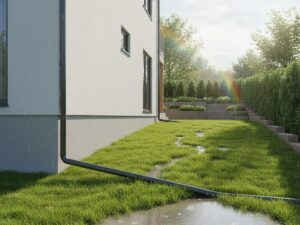
A lot of homes have full basements, requiring yards to be graded away from foundations. Problems arise when downspouts are poorly routed or sump pumps discharge onto already flat lawns. Buried discharge lines are also common, but cold winters can freeze them, forcing water back toward the foundation or into your neighboring yards. Over time, this repeated saturation increases basement moisture issues and puts constant strain on the sump pump systems.
4. Increased Heavy Rainfall
The Chicagoland region experiences more frequent short, intense rainstorms, especially from June through August. These high-volume cloudbursts deliver more water than West Chicago’s slow-draining soils and shallow swales can handle at once, leading to rapid ponding even in yards that appear only mildly sloped, making it one of the common yard water drainage problems.
| Fun Fact: An inch of rain on a 1,000-square-foot yard produces over 600 gallons of water. In West Chicago’s clay soils, much of that water has nowhere to go without proper drainage systems. |
5. Watershed & Floodplain Influence
If your home is near the West Branch DuPage River or Winfield Creek, or subdivision detention basins, then they often sit in lower-lying “bowl” areas. These properties naturally receive runoff from the surrounding land during storms. Even when not officially in a floodplain, these yards can temporarily hold water during creek surges or heavy regional rainfall events, making them a major cause of drainage problems.
II. What Are The Real Consequences Of Yard Drainage Faced By Homeowners?
The actual outcomes of the above causes faced by people are:
1. Persistent Lawn Saturation
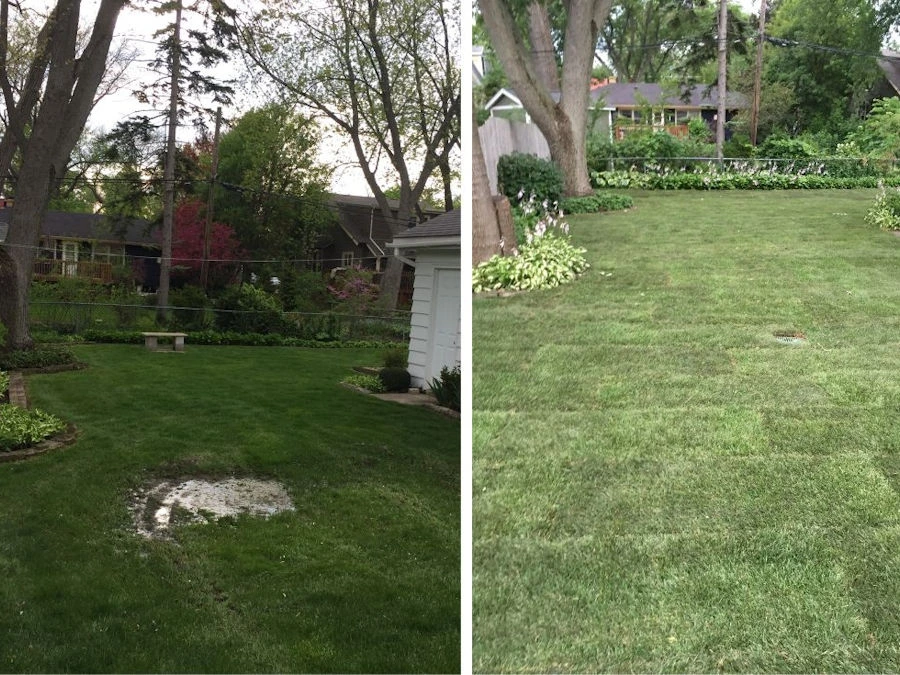
Poor drainage leads to standing water that remains for days after rainfall. If you’re looking for steps for removing standing water from your yard, it’s important first to understand how turf becomes soft and muddy, grass roots suffocate, and shaded or low areas often develop mold or algae. Over time, your lawns will thin out or die entirely, leaving bare soil that worsens future drainage problems.
2. Foundation & Basement Stress
Whenever the water pools near your foundation walls, it increases the risk of seepage through cracks or joints. This prolonged saturation raises hydrostatic pressure against basement walls and floors, which can cause structural cracking or force sump pumps to run excessively, shortening their lifespan and increasing failure risk. And when left unaddressed, these conditions often lead to more costly repairs and long-term structural concerns.
3. Sump Pump Backups & Freezing
When sump pumps discharge onto the surface, water can freeze in winter, creating ice sheets and blocked flow paths. Buried lines that freeze can cause water to backflow into the basement. These conditions often lead to emergency pump failures during winter thaws or early spring storms. By properly directing discharge and insulating pipes, you can prevent freezing and reduce basement flooding risks.
4. Neighbor-To-Neighbor Drainage Disputes
Your blocked drains or poorly aimed pipes often send water into nearby yards. Many West Chicago neighborhoods and HOAs have strict drainage rules, and homeowners may be responsible for changing the original water flow, even by mistake. Under the Illinois Drainage Code, property owners are prohibited from willfully interfering with natural or established drainage paths in a way that materially impedes water flow, reinforcing that improper drainage changes can carry legal consequences.
5. Yard Inaccessibility & Usability Loss
Another major consequence of this problem is that standing water makes play areas, gardens, and pet zones inaccessible, while repeated saturation causes ruts and soil compaction. Spring is especially problematic for people when the lawns remain wet for weeks after snowmelt and early-season rain. These wet conditions also encourage weed growth and invasive plants, further degrading lawn health and making restoration more challenging.
6. Soil Erosion & Landscape Damage
West Chicago’s clay-heavy soils and sudden downpours can cause water to move across the surface rather than soak in. This runoff washes away topsoil, exposes roots, damages mulch beds, and undermines patios, walkways, and retaining walls. Over time, erosion reshapes yard grading, making existing drainage problems worse and more expensive to correct.
7. Increased Mosquito Activity & Pest Issues
Any kind of standing water left after West Chicago’s frequent spring and summer rains creates the ideal breeding conditions for mosquitoes and other pests. Poor drainage around lawns, downspouts, and low areas increases insect activity, raises health concerns, and reduces outdoor comfort, especially during peak warm-weather months when yards should be fully usable for people.
III. Best Yard Drainage Systems For The Conditions Of West Chicago
Some of the feasible drainage solutions offered by yard drainage contractors are:
A. Core Drainage Systems That Fit West Chicago’s Soils & Subdivisions
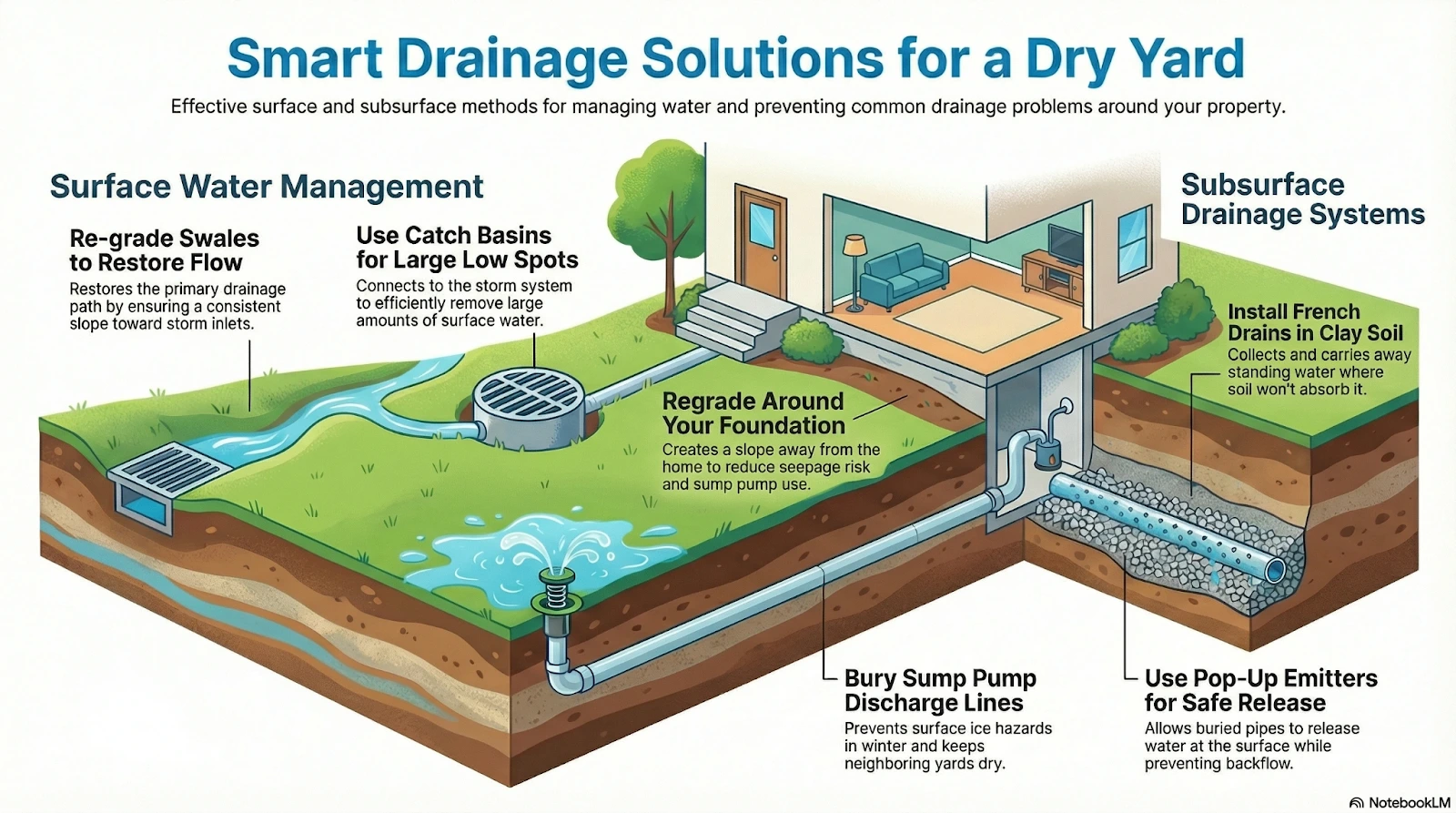
- Re-graded rear/side swales (1% slope): Restoring the original engineered swales reestablishes the primary drainage path used in most West Chicago subdivisions. Proper grading ensures water moves consistently toward storm inlets, detention basins, or approved outlets.
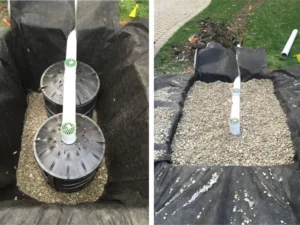
- French drains in clay-heavy low spots: For homeowners asking, “What is a French drain, and how does it work?” The French drain is a subsurface system designed to intercept and redirect water where clay soils prevent natural infiltration. Instead of relying on absorption, it collects groundwater and standing water and safely conveys it away from problem areas, making it a dependable long-term solution for persistent drainage issues.
- Buried sump-pump discharge line to a swale: Sending sump water underground to a swale prevents winter freezing, reduces surface ice hazards, and avoids flooding the neighboring yards.
- Pop-up emitter outlets: The pop-up emitters allow buried pipes to release water safely at the surface only during active flow. They prevent backflow, reduce erosion, and are ideal for flat lawns, which are common in West Chicago.
- Catch basins/yard drains connected to subdivision storm system: In HOA-managed neighborhoods with storm infrastructure, catch basins connected to approved outlets efficiently remove surface water from low areas and direct it to detention ponds or municipal systems.
- Targeted surface regrading around foundations: Even minor adjustments around foundation walls make quite a difference. Ensuring a consistent slope away from the home reduces seepage risk and lowers sump pump demand in flat yards.
B. Systems For Wet Or Floodplain-Prone Areas
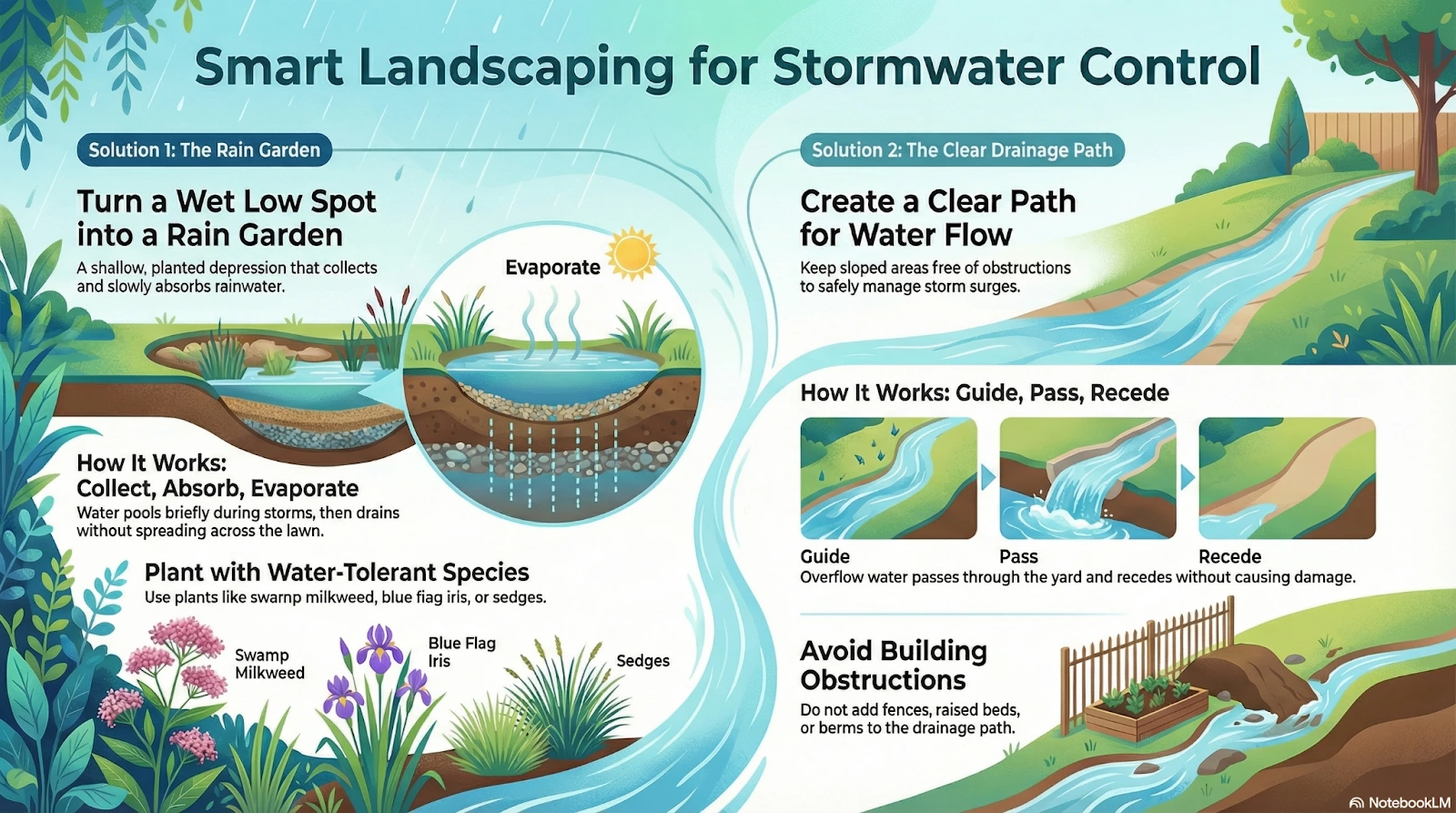
- Rain gardens with native wet-tolerant plants: Rain gardens work best in hydric soil pockets or near creeks by temporarily holding and filtering water. The native plants tolerate periodic saturation while improving soil structure over time.
Example: A backyard low spot that stays wet after storms can be reshaped into a shallow rain garden planted with species like swamp milkweed, blue flag iris, or sedges. During heavy rain, water briefly pools in the garden, then slowly drains or evaporates without spreading across the lawn.
- Open floodplain-compatible flow paths: For homes near the West Branch DuPage River, maintaining clear, open flow paths allows excess water to move safely through the property without damaging the structures or causing any type of erosion.
Example: A side yard sloped gently toward the rear of the property is kept free of fencing, raised beds, or berms so overflow from river surges can pass through during extreme storms, then recede without undermining patios, sheds, or foundation walls.
C. Systems For Better-Draining Soil Pockets
- Dry wells/infiltration trenches: In areas where loam or sandy loam soils exist, dry wells can handle roof runoff effectively. These systems are best suited for front yards or limited roof areas and should only be used after soil verification. This is an important consideration when you are evaluating whether to choose between French drains vs. dry wells.
- For example, a home with a small front yard and permeable soil may use a dry well to absorb downspout water without directing flow toward the foundation.
D. Simple (But Essential) Homeowner Fixes
- Downspout extensions aimed toward swales: Properly directing downspouts prevents foundation saturation and reduces sump pump cycling. Even small extensions can dramatically improve surface drainage. This helps rainwater flow away from your home instead of pooling near the foundation.
- Clearing and maintaining rear swales & inlets: Make sure to conduct routine maintenance, as it keeps engineered drainage systems functional. Removing debris, sediment, and overgrowth prevents your yard from ponding during heavy storms. This kind of regular cleaning ensures water flows smoothly through your yard and prevents flooding or soggy spots.
Conclusion
Now that we’ve understood the root causes, consequences, and solutions, living with constant water issues won’t be a problem anymore. By following the right corrections in place, your property regains stability, usability, and long-term protection. And, if you are still dealing with such problems, My Landscape Contractor is available to get you sorted with everything. Our experienced team handles everything from assessment to installation.
Ready for a dry, usable yard? Contact My Landscape Contractor for an expert assessment of your yard drainage in West Chicago!
Frequently Asked Questions
What are the common signs of poor yard drainage?
Check for any kind of standing water, soggy soil, patchy or dying grass, algae growth, mold near foundations, visible erosion, and water that drains very slowly after rainfall. All this indicates poor yard drainage.
Can the climate in West Chicago affect my yard drainage?
Yes. West Chicago’s heavy rainfall, rapid snowmelt, freeze–thaw cycles, and seasonal storms often overwhelm soil absorption, increase surface runoff, and strain drainage systems, leading to frequent yard flooding, standing water, and long-term drainage failures.
When should I seek professional help?
You should seek professional drainage help when flooding persists despite efforts, when erosion worsens, mold or moisture appear near foundations, or when all DIY solutions fail, as these signs indicate deeper issues with grading, soil conditions, or drainage system design.
Does the amount of hard surfaces on my property affect drainage?
Yes. Hard surfaces like driveways, patios, and sidewalks prevent water absorption, increase surface runoff, strain drainage systems, and raise the risk of pooling and property flooding.
Can I install these solutions myself?
There are certain basic fixes like minor grading or small French drains that can be DIY projects, but complex systems involving slope correction, underground piping, or sump discharge require proper professional installation.
I have a drainage system, but my yard still floods. What’s wrong?
Yard flooding can still occur due to clogged or collapsed pipes, improper drainage design, incorrect grading or slope, soil compaction, or outdated systems that cannot effectively manage West Chicago’s current rainfall, snowmelt, and increased runoff.