Chicago’s climate puts significant stress on outdoor surfaces. Long winters, constant freeze–thaw cycles, snow, moisture, and the use of winter salts all affect how well a patio holds up over time. These demanding conditions make it especially important to choose the best paver patio types that remain stable, resist weather-related damage, and perform well year-round.
If you’re planning to build a new patio or improve an existing one, it helps to understand which materials are better suited for this climate and why. In this blog, you’ll find clear information on the paver options that work reliably in West Chicago, how they respond to local weather conditions, and what benefits they offer for long-term use.
Essential Insights for Durable Paver Patios Types
Selecting the right paver patio types is essential for West Chicago homes to withstand freeze–thaw cycles, moisture, and seasonal changes. Regular paver patio maintenance, proper drainage, and professional installation ensure long-lasting durability. Concrete, brick, porcelain, and permeable pavers provide reliable options, while MLC offers expert repair and maintenance services to keep patios functional and attractive year-round.
Types of Paver Patios for West Chicago Homes
Below are the paver patio types that consistently perform well in these conditions, along with the qualities that make each one a strong choice for long-term use:
Concrete Pavers
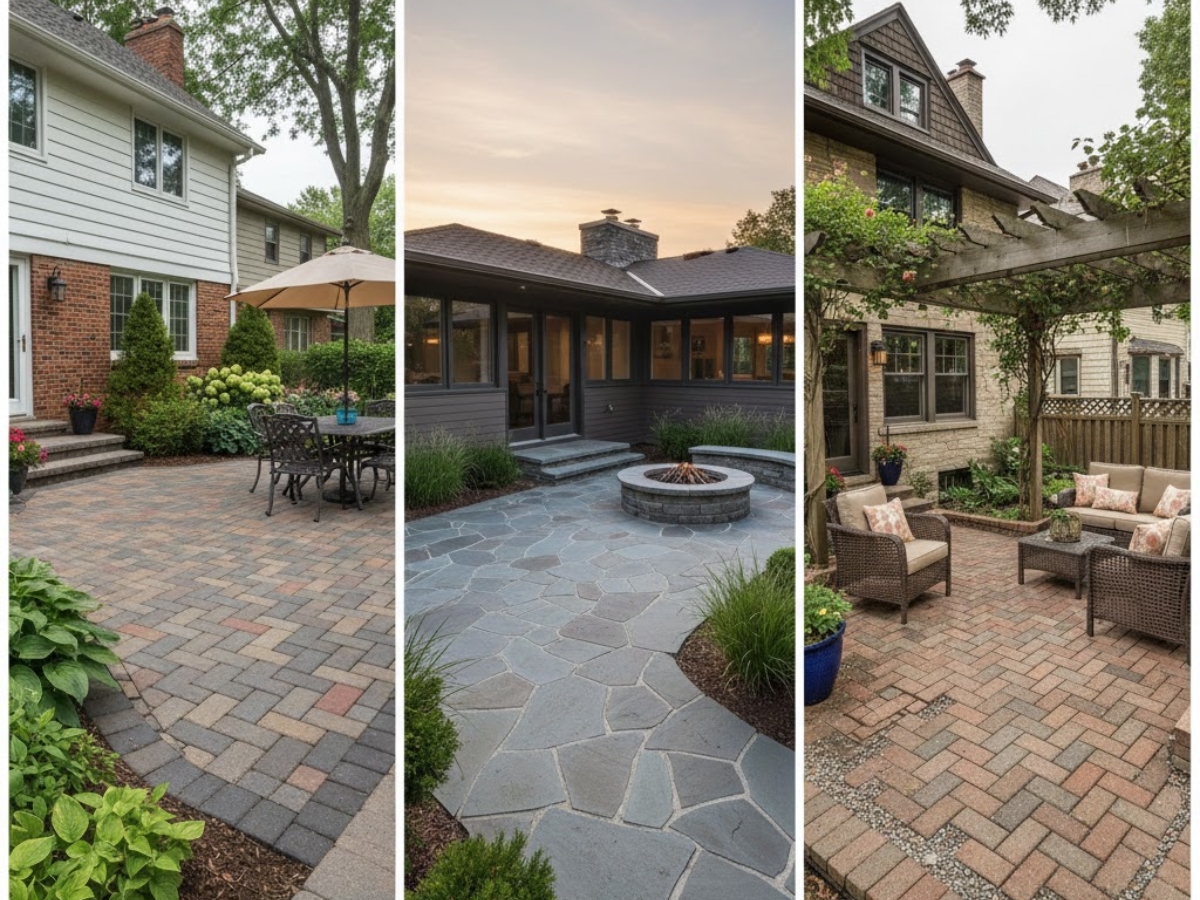
Concrete pavers are widely used in West Chicago because they offer strength, durability, and reliable performance in freeze–thaw environments. Their interlocking design helps distribute pressure evenly, reducing the chances of cracking when the ground shifts in winter. Concrete units also come in multiple colors, textures, and patterns, making them suitable for both modern and traditional patio designs.
These patios function best when installed with a properly compacted base and strong edging, as this keeps the pavers from moving during seasonal moisture changes. Their dense structure also helps melt snow faster under sunlight, which can be useful during the early spring thaw.
Brick (Clay) Pavers
Brick pavers provide a classic and highly durable option that performs well in cold regions. High-fired clay pavers absorb minimal moisture, which reduces the risk of cracking when temperatures drop below freezing. Their solid composition and tight interlocking pattern help them remain stable even when the soil expands or contracts.
While brick is a dependable material, proper drainage is essential for long-term performance. Homeowners comparing different paver patio types should remember that following basic do’s and don’ts, such as using the right base material and avoiding harsh chemical de-icers, can significantly extend the life of a brick patio.
Natural Stone Pavers
Natural stone, including bluestone, granite, and flagstone, is the best patio design idea in West Chicago for homeowners who want both durability and a more natural appearance. Many of these stones have low porosity, meaning they absorb little water and hold up well to freeze-thaw cycles. Their textured surfaces offer good traction, which is especially useful during icy or wet conditions.
Stone quality can vary across different paver patio types, so it’s important to choose materials that are rated for outdoor use in cold climates. Sealing the surface and ensuring proper slope and drainage prevents water from pooling, protecting the stone from long-term wear. Natural stone also works well for custom or irregular patio layouts.
Porcelain Pavers
Porcelain pavers are engineered for slow water absorption, making them highly resistant to cracking during winter freezes. They are manufactured at extremely high temperatures, which gives them excellent durability and resistance to stains, fading, and moisture. Because they retain very little heat, porcelain surfaces remain comfortable underfoot during warm summer months.
These pavers are often installed over specialized bases or pedestal systems to support their structure. When choosing paver patio types, it’s important to select porcelain tiles specifically rated for exterior freeze–thaw conditions to ensure reliable year-round performance. With their sleek, modern appearance, porcelain is a popular option for contemporary outdoor designs.
Permeable Pavers
Permeable pavers are designed to let water pass through the joints into a stone base below. This makes them a smart option for West Chicago homes where heavy rain, snowmelt, and stormwater runoff can create drainage problems around patios and foundations. Their open-joint design reduces surface water, helping prevent ice formation in winter.
These pavers hold up well against ground movement and maintain stability through seasonal changes. Homeowners reviewing sustainable paver patio types should know that occasional cleaning of the joint material ensures water continues to flow efficiently. Permeable patios are also an environmentally conscious choice, improving drainage and reducing runoff, a feature many homeowners discuss with paver patio contractors during planning.
Top Pitfalls to Avoid When Picking Paver Patio Materials in West Chicago
- Some pavers absorb more water than they should, increasing the chances of expansion and breakage when the temperature drops.
- The patio pavers often fail not because of the material, but because the base wasn’t compacted correctly or the slope wasn’t established for drainage.
- Attractive designs can mislead homeowners into choosing materials that don’t stand up well to salt exposure or ground movement, which can result in unexpected paver patio repair down the line, especially when certain paver patio types aren’t suited for harsh winters.
- Winter maintenance becomes a problem when deicers incompatible with the paver material are used, often causing surface erosion.
- Certain natural stones, especially softer ones, deteriorate quickly if their density and frost resistance aren’t carefully evaluated beforehand.
- Joint stability weakens when regular sand is used instead of polymeric sand, allowing weeds and water intrusion over time.
- The natural expansion of clay-heavy soils in West Chicago paver patio areas can push pavers out of alignment if the patio system isn’t flexible enough.
- Darker or dense pavers can become uncomfortably hot in mid-summer, making the patio difficult to use during peak temperatures.
- Poor craftsmanship from inexperienced installers often results in settling issues and uneven surfaces within just a few seasons.
- Some pavers demand sealing or periodic re-sanding, and skipping these steps shortens the overall life of the patio.
- Local drainage rules or HOA guidelines are sometimes ignored, leading to water management problems or compliance issues later.
Don’t fall into these pitfalls. Taking smart steps early on protects your investment and helps your outdoor space perform beautifully through every season.
Ready to upgrade your patio with durable, weather-resistant pavers? Contact us today to discuss your project and explore the best paver patio solutions for West Chicago homes.
Frequently Asked Questions
1. How can I ensure proper Paver Patio Maintenance for my West Chicago home?
Regular cleaning, joint upkeep, and sealing when needed help extend the life of your patio. Proper maintenance ensures all paver patio types remain durable against weather and wear.
2. What are the most durable paver patio types for West Chicago homes?
Concrete, brick, porcelain, and permeable pavers handle freeze–thaw cycles, moisture, and seasonal changes, making them some of the best patio pavers for this area.
3. How do I choose the right paver patio types for my design ideas in West Chicago?
Consider durability, drainage, and maintenance needs along with patio design ideas in West Chicago to pick materials that combine style with long-term performance.
4. Can My Landscape Contractor help with Paver Patio Maintenance or repairs?
Yes, MLC offers expert paver patio maintenance and repair services, ensuring West Chicago paver patios remain functional and visually appealing year-round.